

23/02/2026
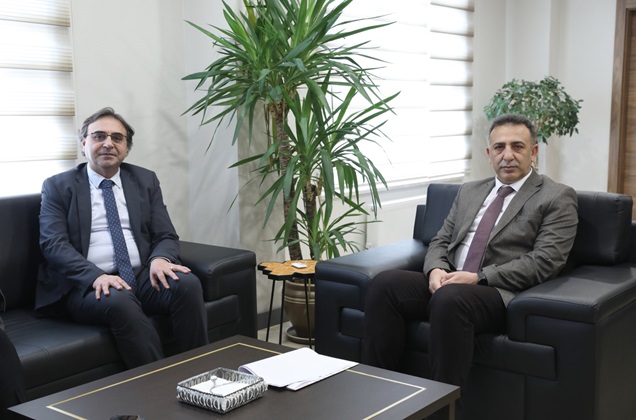
Sabancı University Vice President Prof. Dr. Mehmet Yıldız met with Prof. Dr. Halil Hasar, Director of Climate Change at the Ministry of Environment, Urbanization, and Climate Change. The meeting covered the role of academic R&D in achieving Türkiye's climate goals within the scope of COP31, strategic cooperation opportunities, and the contributions the university can offer to the COP31 process.
Prof. Dr. Mehmet Yıldız, Vice President for Research and Development at Sabancı University, met with Prof. Dr. Halil Hasar, Director of Climate Change at the Ministry of Environment, Urbanization, and Climate Change, as part of preparations for COP31, which will be hosted by Türkiye. The meeting focused on the 31st Conference of the Parties (COP31) to the United Nations Framework Convention on Climate Change, which will be hosted by Türkiye in Antalya this year. The meeting, which highlighted Sabancı University's advanced technology development capacity and pioneering work in climate science, also covered potential collaborations that could strengthen Türkiye's hand in global climate diplomacy.
The importance of synergy between state institutions and universities was emphasized
Prof. Dr. Mehmet Yıldız, in his assessment of the meeting, stated, “At Sabancı University, we consider transforming our scientific contributions in the fields of sustainability and climate into societal benefit as a primary goal. This meeting, which emphasized the importance of synergy between state institutions and established academic institutions during the COP31 process hosted by Türkiye, also reinforced our university's role as a 'research center' that produces solutions to global crises.”
The meeting, which took place in Ankara, highlighted Sabancı University's strong research centers and interdisciplinary work culture. The discussion highlighted the work of relevant academic units, centers, and forums operating under the university's umbrella, demonstrating alignment with the COP31 action agenda. Particular emphasis was placed on the university's capacity in areas such as new technology development, carbon management, and climate change adaptation, and the contributions this capacity could make to the COP31 action agenda.


